

Honored and Rooted: Fallston Group Recognized Among Greater Baltimore’s Top Family-Owned Businesses

Fallston Group is grateful to announce that the Baltimore Business Journal has recognized us as one of Greater Baltimore’s top family-owned businesses for 2025! This honor, part of the BBJ’s annual Family-Owned Business Awards, celebrates companies that have demonstrated excellence, innovation, ethics, and philanthropy—qualities we strive to embody every day. We are especially grateful to stand alongside other businesses that, like us, have put down deep roots in Maryland and built trust across generations. Fallston Group was founded with a simple but powerful mission: help people during life’s most critical times – it’s baked into our DNA. As a family-owned business, we approach our work with a personal sense of responsibility—not just to our clients, but to the community we call home. Our team’s commitment to reputation management and crisis leadership isn’t just about business but legacy, accountability, and impact. Our work is more relevant than ever in today’s rapidly changing world. Trust is fragile, and brand equity can be won or lost in a single moment. We’re here to safeguard our clients’ reputations and turn short-term adversity into long-term advantage with clarity, conviction, and care. Thank you to the Baltimore Business Journal for this meaningful recognition, and congratulations to our fellow honorees. We look forward to continuing to serve our clients, partners, and the Greater Baltimore community for years to come.
The Real-World Cost of Digital Recklessness: A Call for Accountability
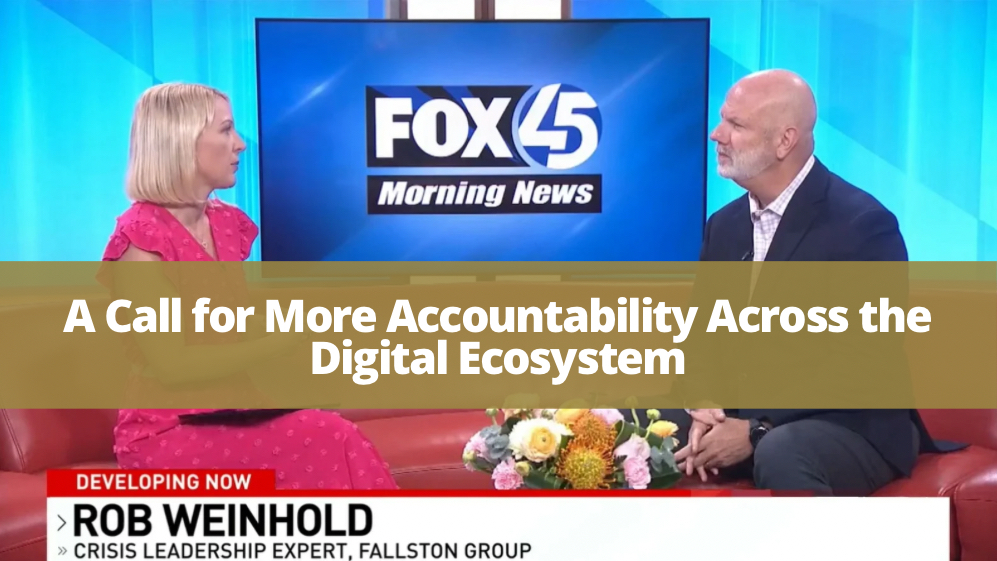
In today’s hyperconnected and always-on digital world, the viral spread of misinformation can rapidly and irrevocably damage lives. At Fallston Group, we’ve spent decades advising organizations and individuals during their most critical moments—and if one truth has become abundantly clear, it’s this: digital recklessness has very real, often life-altering consequences. The recent situation involving Mary Kate Cornett, a college freshman at the University of Mississippi, underscores the urgent need for greater accountability across our digital ecosystem. Based on publicly available reports, Ms. Cornett—by all accounts,a promising first-year business student—found herself at the center of a viral firestorm after an anonymous and unverified post was made on the YikYak platform on February 25th. What began as a baseless rumor quickly spiraled across platforms like X (formerly Twitter), drawing the attention of high-profile commentators and online audiences. Her name and likeness were circulated widely without her consent, often without credible facts. While those spreading the story may have viewed it as a moment of entertainment or gossip, the human cost to Ms. Cornett was significant and deeply personal. This moment is not about adjudicating guilt or intent—it’s about acknowledging a broader systemic and human failure. It’s a cautionary tale for institutions, influencers, and individuals alike. And it’s one of many such stories in a time when reputations can be compromised with a single click. Five Critical Crisis Leadership Observations 1. Real People, Real Pain Behind every viral moment is a real person. In this case, a young woman’s formative college experience has reportedly been upended by an untrue narrative. Reputational harm doesn’t just affect public figures—it affects students, professionals, and everyday citizens whose lives are impacted by reckless digital behavior. 2. Platforms Must Act—Swiftly and Transparently Social media companies must continue to evolve their moderation and response capabilities to address harmful content in real time. Whether it’s anonymous platforms or large-scale social networks, delayed action contributes to widespread harm. 3. Content Amplifiers Must Use Their Platforms Responsibly While sports media and digital commentary platforms play an important role in modern discourse, the line between free speech and reputational harm must be navigated with care. Those with influence must be thoughtful and discerning—particularly when discussing unverified claims involving private individuals. 4. Accountability Must Be a Shared Priority Whether through corporate governance, advertiser pressure, or public expectations, digital amplifiers must be held to higher standards. The systems that allow misinformation to thrive must be reviewed, reformed, and enforced through responsible action. 5. Digital Education Is a Survival Skill Colleges, universities, and families have a growing responsibility to educate young people about the risks of digital exposure. Media literacy, digital resilience, and reputation defense must be integrated into the student experience. These aren’t “nice-to-haves”—they’re essentials in today’s reputational landscape. At Fallston Group, we often remind our clients that reputation leads to trust, and trust leads to valuation—and not all currency is financial. In fact, in many cases, reputational currency is what opens doors, secures relationships, and sustains opportunity. To those affected by the irresponsible spread of misinformation: you are not alone. And to those with a microphone or platform—whether digital or traditional—remember that your influence is a responsibility, not a right. If you are an academic center of excellence—particularly within higher education—and wish to ensure your students and stakeholders are properly educated and protected in today’s fast-paced, high-stakes media environment, contact Fallston Group. Our crisis leadership experts can help you develop proactive training, reputational safeguards, and crisis response protocols tailored to your institution. The stakes are too high to wait. All of us must be ready to meet the moment.
“If You Don’t Tell Your Story, Someone Else Will”

In the fast-paced digital world, perception drives reality. Whether you’re an individual, brand, or organization, the narrative surrounding your identity shapes trust, loyalty, and influence. That’s why I live by the mantra, “If you don’t tell your story, someone else will. And, when someone else tells your story, it certainly won’t be the story you want told.” This principle underscores the importance of proactive communication and reputation management. Research supports its urgency: 85% of consumers say they are more likely to trust a brand with a history of transparent communication, according to a 2022 Edelman Trust Barometer study. Conversely, 57% of people say they lose trust in organizations that remain silent during crises or controversies. Allowing others to shape your story can lead to a loss of control, misrepresentation, or even reputational harm. A Pew Research Center survey revealed that 70% of Americans encounter false or misleading information online, which amplifies the risk of your story being distorted if left untold. Effective storytelling empowers individuals and organizations to shape their legacy and influence. It’s not about spin or embellishment; it’s about authentic, consistent narratives that reflect your values and mission. For example, companies like Patagonia masterfully craft their stories around environmental stewardship, which resonates with their target audience and bolsters their brand loyalty. Telling your story proactively isn’t just a defense mechanism; it’s a strategic asset. Share your milestones, values, and contributions with clarity and confidence. Use platforms where your audience is most active—whether social media, earned media, or community engagement. The bottom line is this: silence is a story in itself, often interpreted as guilt, weakness, or indifference. Don’t leave your narrative to chance. Take control, communicate deliberately, and ensure that the story being told is the one you want the world to hear. Your reputation depends on it.
Fallston Group’s Proactive Crisis Leadership Approach for University Presidents
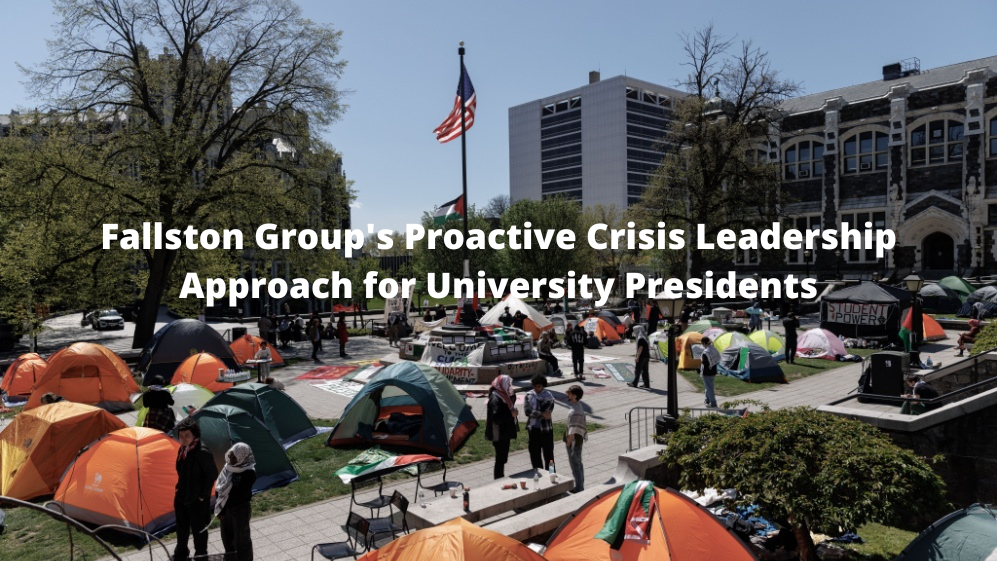
As a university president planning for upcoming protests on campus, it’s important to adopt a proactive and strategic approach. Here’s a comprehensive plan that addresses potential challenges while maintaining a commitment to the principles of free expression and campus safety: Develop a Comprehensive Protest Management Plan: Risk Assessment: Conduct a thorough assessment of potential risks and vulnerabilities related to campus protests. Consider factors such as historical issues, current events, and any specific concerns raised by students or faculty. Protocols and Procedures: Establish clear protocols and procedures for managing protests. This should include guidelines for communication, coordination with law enforcement, and handling disruptions. Engage with Stakeholders: Student and Faculty Engagement: Engage with student leaders, faculty, and staff to understand their concerns and expectations. Foster open communication channels to address grievances before they escalate into protests. Community Partnerships: Collaborate with local community organizations, law enforcement, and other stakeholders to develop a coordinated response plan. Communicate Transparently: Pre-Protest Information: Provide advance notice to the university community about the potential for protests and outline the university’s approach to managing them. Ensure that all stakeholders are informed of policies and procedures. Ongoing Updates: During protests, offer regular updates through multiple communication channels, including email, social media, and campus websites, to keep the community informed and manage expectations. Establish Designated Areas and Guidelines: Designated Protest Zones: Designate specific areas on campus where protests can take place without disrupting academic activities or campus operations. Clearly mark these zones and provide necessary resources for their use. Guidelines for Conduct: Develop and communicate guidelines for peaceful and respectful protest conduct. Ensure that these guidelines emphasize safety and respect for all members of the campus community. Prepare for Safety and Security: Coordination with Security: Work with campus security and local law enforcement to ensure they are prepared to manage potential disruptions. Coordinate on the development of security plans and emergency response protocols. Training and Drills: Provide training for security personnel, including crisis intervention and de-escalation techniques. Conduct drills to prepare for various protest scenarios and ensure readiness. Support and Resources: Counseling and Support Services: Ensure that counseling and support services are available to students, faculty, and staff who may be affected by protests. Offer resources to help manage stress and address any emotional or psychological impacts. Conflict Resolution: Facilitate access to conflict resolution and mediation services to address grievances and disputes that may arise during or after protests. Monitor and Evaluate: Real-Time Monitoring: Monitor protest activities in real-time to assess the situation and adjust plans as necessary. Use surveillance and communication tools to keep track of developments and ensure a timely response. Post-Protest Review: After a protest, conduct a thorough review to evaluate the effectiveness of the response and identify areas for improvement. Gather feedback from stakeholders and incorporate lessons learned into future planning. By taking these steps, a university president can effectively plan for and manage upcoming protests, balancing the need to respect free expression with the responsibility to maintain campus safety and order.
Crisis Chat: Courage to Confront

When You Are the Face of Crisis: 5 Keys for Successful Media Relations

Being proactive and getting out in front of a situation is the best way to remain in control of it. Here are five keys for successful communication when facing the media.
Preventing a Crisis At Its Most Basic Level: The Art of Listening

Image from: LegalVoice Many issues that start small and grow into full-blown crises are preventable, but recognizing and preventing a crisis takes a certain amount of focus and time that many leaders overlook, until the crisis has nearly spiraled out of control. At that point, hindsight is 20/20. People and their beliefs and feelings are at the core of many crises: those between consumers and a company, between coworkers, and between employees and management. An issue that arises in any relationship has the potential to cause lasting reputation damage to people and organizations. Yet in all of these interactions, the root cause is usually a breakdown in basic communication. And at the heart of communication is the art of listening. Listening is not just absorbing what you think someone said. To truly hear someone, they must feel heard. This means the listener must be able to reflect back to the speaker, in different terms, exactly what they said using feelings and values. The ability to do this will save time, money, customers, relationships, and sometimes even careers. Feelings People often use phrases such as, “I feel like…” or “I feel that…”. Anything following ‘like’ or ‘that’ is probably not a feeling. For example: “I feel like everyone is out to get me” is not a feeling. “I feel threatened” expresses a feeling. Most people don’t talk using actual feeling words. When reflecting feelings, people know they’ve been heard when you can reflect an actual feeling they’ve described. Values Values are the things that are important to people. They are the “why” behind a feeling. Examples of values are acceptance, hard work, flexibility, equality, justice. When someone says, “The warning signs are so confusing, no wonder people don’t even bother following them. I have a background in public safety–someone should have asked me for input,” the values they are expressing are clarity and inclusivity. Example interaction: Sam comes into your office and says, “I can’t believe you cut me off during the meeting. I worked on that project for days and you didn’t even let me explain the process.” You probably have a very good reason Sam didn’t get to speak in the meeting, but he doesn’t see it. If you shut him down now, his resentment will grow. If you make him feel heard, the issue will be over and Sam will actually feel better about things than before the incident happened. Wrong answer: “Sorry, Sam, but time got away from us. Maybe next time we’ll have the chance to present the whole strategy.” Sam just got shut down. Nothing you said validated how he feels, even though you may be right. Right answer: “Sam, it sounds like you feel slighted and unappreciated with the way things happened during the meeting. I hear that you value hard work and participation when it comes to talking about the project. Is that right?” (Asking “is that right?” is key – Sam can confirm or correct you, but either way, you are expressing that understanding him matters.) Sam will probably say, “Yeah, that’s right, it’s okay.…” You can follow up with what you might have said before about how there wasn’t time, but Sam feels understood now and his unhappiness won’t escalate with every interaction. Interactions as simple as this one epitomize the simple beginning of issues that turn into lawsuits, social media tirades, and personnel crises. Sam’s feelings can ultimately cost you time and money, and a similar interaction with a customer or stakeholder can cost you much more. Practice is important. Reflect feelings and values to everyone you meet using phrases and language that feels natural to you. Sincerity is everything. You will be amazed at how wanting to be understood is often 90% of the issue yet it is something over which you, the listener, have 100% control.
Malaysia Airlines: Responding to Crisis

Here are four strategic steps that Malaysia Airlines took after the disappearance of flight MH370 that companies can model if they are faced with a similar crisis.
Malaysia Airlines: The Press, the Emotion, the Mystery

Malaysia Airlines flight MH370 seemingly vanished into thin air. With 227 passengers and 12 employees on board, the stakes are high and the public and press are demanding answers.
9 Considerations While Developing a Crisis Communications Plan

Taking a proactive approach will keep your company ready if a crisis were to occur. Here are nine things to keep in mind while developing your crisis communications plan.
