

The Silent Crisis: Violent Content on Digital Platforms Affecting Our Children
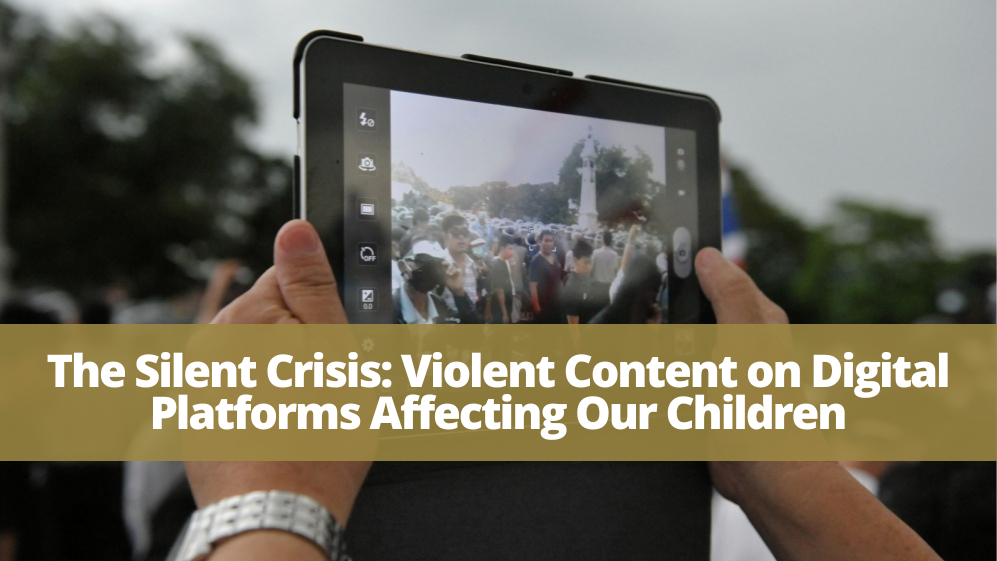
As a former Baltimore Police Officer, I have personally witnessed too many homicides, shootings, attempted murders, and horrific violent crimes during my time on the street. I’ve also, like all police officers across the country, helped many victims in the brutal aftermath. These experiences, which many would call overexposure, change the way you think, feel, and act. That said, this was the career I chose, and despite being exposed to the very worst of humanity, I also saw the very best along the way, sometimes within the same hour. These experiences typically involved ordinary people being thrust into extraordinary situations. As police officers, we were selected, trained, and often had one another to share the hardships, albeit traumatic by most standards. We were prepared for these lived experiences, but young people, through their digital experiences, are not. In our interconnected digital world, our youth are increasingly exposed to the harmful effects of social media, gaming, and other online platforms. Managing social media laws and oversight is an arduous, long-term effort, so we must focus on what we can control rather than what we cannot. Returning to a core principle I taught rookie officers: “You’re going to see some things out here you never imagined possible. Remember, the violence you see is going to happen whether you are here or not. Your job is to show up as the very best version of yourself to help people through life’s most difficult times, as a professional who is both safe and trusted by everyone you encounter.” Again, focus on what you can control. When Violence Goes Viral We live in an age where tragedy doesn’t just happen – it’s broadcast, shared, and replayed across every screen – the velocity of violence on our kids’ screens is unrelenting. Consider three recent events that shook communities and then ricocheted across the digital world: In Minneapolis, during a morning Mass at Annunciation Catholic Church & School, a shooter opened fire through stained-glass windows. Two children, just 8 and 10 years old, were killed, and at least 17 others were injured before the perpetrator died by suicide. This incident occurred during the first few weeks of the 2025 school year, sparking fear among parents, students, and the broader school community nationwide. In Charlotte, North Carolina, Iryna Zarutska, a 23-year-old Ukrainian refugee, was stabbed to death in an unprovoked attack while riding a light rail train. The video captured of this brutal crime evoked strong emotions and has been played tens of millions of times worldwide. And just one day later, political commentator Charlie Kirk, who had spoken out about Zarutska’s murder, was fatally shot at a public event in Utah. His assassination circulated on social platforms before many first responders arrived. Real-time, graphic violence that young people couldn’t help but witness on their devices, over and over. These events, tragic in their own right, became digital spectacles. Children and teens didn’t have to seek them out; the videos, headlines, commentary, and e-community conversations were pushed into feeds and group chats, often before families even had time to grieve. For young people, the question is not if they’ll see violence online, it’s when. And in my view, it changes you and them. The Research Is Clear The average child now spends 6 to 8 hours every day on screens for ‘entertainment’ alone, and that’s before counting schoolwork. Over this time, exposure to violence and harmful content is not the exception; I believe it’s become the norm. A U.S. national study of 6- to 17-year-olds found that 4+ hours of daily screen time (excluding schoolwork) is strongly associated with higher odds of anxiety, depression, ADHD, and behavioral problems, with sleep disruption playing a major role. A 2023 longitudinal study of adolescents showed that increases in social media use predicted higher rates of depressive symptoms a year later. In the UK, research found that teenagers who saw real-life violence on social media (fights, weapons, assaults) were more likely to feel unsafe in their own neighborhoods. Critically, most of this content wasn’t searched for; algorithms recommended it. A 2025 study of adolescents aged 12-18 found that intense gaming habits, particularly when they interrupted daily routines, were associated with more positive attitudes toward violence. Emotional regulation and frustration tolerance were crucial factors in whether these attitudes developed. Bottom line, the digital world can amplify violence, normalize aggression, and make children feel unsafe in ways that profoundly shape their mental health and worldview. It is up to all of us to maintain healthy boundaries. So, what now? What Parents Can Do This is not simply a technology issue; it is a leadership issue for every parent, grandparent, guardian, and anyone who gatekeeps the digital space for our young people. Here are five action steps that can make a difference: Talk Early and Often Bring up events proactively. When tragedies trend online, ask your kids what they saw and how it made them feel. Discuss the distinction between truth and rumor, while providing context. Give your children the space and grace to talk about how they are thinking, feeling, and acting. Set Boundaries that Stick Limit recreational screen time. Create no-screen zones (bedrooms, dinner table) and no-screen times (before bed). These simple habits reduce overexposure and improve sleep. See What They See Occasionally, co-view videos, co-play games, or scroll feeds together. You’ll better understand their digital reality, and they’ll know you’re credible when you talk about it. You’ll see what piques their interest, where they linger, and what content they quickly scroll by. Ask for their opinion and seek to understand. Build Resilience in Daily Life Encourage consistent sleep, physical activity, and offline hobbies. Emotional resilience and healthy routines act as buffers against harmful content. Model Behavior & Values Children learn more from what we do than what we say. Show them that you, too, set limits, avoid sensational content, and focus on healthier sources of information. Remember, young people watch your feet – words without embodiment result in lost
Can an Employer Fire an Employee for Offensive Social Media Posts? Featured Blog by Howard Kurman, Founder of Offit Kurman
Can an Employer Fire an Employee for Offensive Social Media Posts? In an article in the September 16, 2025 edition of the Washington Post the lead paragraph read as follows: “The wave of companies and other institutions firing or suspending employees over what they’ve said in reaction to last week’s killing of conservative influencer Charlie Kirk has expanded in recent days, as some of his supporters in and outside the government amp up a push against speech they say crosses lines.” Thus, the question which arises in the minds of both employees and employers related to the voluminous publicity surrounding the recent Kirk assassination is whether an employee’s social media post which is deemed to be offensive can justify the potential termination of such employee. The short answer to this inquiry is that in the private sector, as opposed to the arena of public employment where first amendment protections may be applicable, employers have wide discretion to discipline and even fire employees for posts which are deemed to be unduly offensive, inflammatory, or violative of their cultural or internal policies. The caveat for private sector employers is that employees enjoy statutory protections under the National Labor Relations Act for speech of a political or social nature when such speech or posted comment is related to such employee’s workplace’s wages, hours or terms and conditions of employment. Furthermore, employees also enjoy protections under Title VII of the federal Civil Rights Act if, for instance, their social media posts protest discrimination in the workplace, when that alleged discrimination refers to any protected status, such as religion, national origin, race, disability, etc. Private employers would be well-advised in this incendiary political climate to analyze each situation based on the facts and circumstances of the post in question, and to evaluate whether such post is violative of its internal policies, is deemed to be overly inflammatory and/or offensive to a person(s), is disparaging or defamatory to the employer or its employees or customers, is damaging to the company’s reputation or cultivated image, or is deemed to be simply inconsistent with civilized and acceptable societal discourse. In any situation where termination may be predicated upon a social media post and where uncertainty may exist regarding potential legal exposure and/or a looming public relations crisis, it is always advisable for the employer to consult with competent employment counsel and/or a public relations crisis expert, like Fallston Group. Leadership extends beyond the workplace. For a broader look at how leaders can navigate the challenges of today’s digital world, read our companion blog: The Perils of Digital Exposure. Howard Kurman is a founder of Offit Kurman, a top 200 national law firm. He is a principal in the firm’s labor/employment practice and regularly counsels employers on all facets of employment and labor relations law and practice. To contact Howard he may be emailed at hkurman@offitkurman.com, or by phone at his office: 410-209-6417.
The Taylor Swift Effect: How the NFL, DraftKings, and Others Harnessed Taylor Swift’s Star Power

Today, very few brands hold as much influence and star power as Taylor Swift. With an ever-growing fan base, Swift has proven to be a game-changer in the music industry, sports, entertainment, and marketing. Swift’s remarkable effect on the NFL can be seen through her impact on Travis Kelce, a Kansas City Chief’s offensive superstar. But first, let’s take a look at the numbers: Bears vs. Chiefs – Swift’s 1st NFL engagement – viewership (ages 18 – 49) increased by over 60%. Jets vs. Chiefs – Swift’s 2nd NFL engagement – 17 televised cutaways to Swift; 2 commercials for Swift’s new movie. Travis Kelce Jersey Sales – increased over 400% after the Bears vs. Chiefs game. Kelce’s Instagram gained over 860,000 followers in the last 7 days. The NFL’s official social media accounts posted about Swift over 30 times last week, resulting in more than 170 million impressions. DraftKings “Feeling 22” prop bet featured Travis Kelce over a 22-yard reception. Swift’s rise to worldwide fame is a testament to her immense talent as a musician and songwriter, but not to overlook her goodwill and clean reputation. Over the years, she has cultivated an exceptionally loyal fanbase, known as “Swifties,” who hang glom onto her every word. This level of devotion and influence extends far beyond the music industry, transcending into the world of sports and beyond. However, it all starts with Swift’s authenticity and credibility, enhancing the brands she associates with – we call this the halo effect. Known for her honest songwriting and genuine personality, Swift has fostered a deep connection with her audience. When she aligns herself with a brand, her fans view it as a sincere endorsement, increasing brand trust and credibility. This has value for those in her brand sphere. Travis Kelce, a standout tight end for the Kansas City Chiefs, is one of the NFL’s most talented players. Beyond his remarkable on-field abilities, Kelce has become known for his vibrant personality and appearances at Swift’s concerts. By personally and publicly aligning himself with Swift, Kelce has tapped into her fanbase, boosting his own popularity and expanding his reach beyond the football field. Now, let’s just say for a moment that this is ‘love’, not ‘business.’ For the record! Swift’s positive reputation exudes elegance, grace, and empowerment. By associating herself with brands that reflect similar values, she elevates their brand image in the eyes of consumers. Whether it’s fashion labels or charitable organizations, Swift’s positive aura enhances their reputation and strengthens their connection with consumers. The NFL, recognizing Swift’s influence and appeal, has cleverly leveraged her star power to enhance its brand, attract a wider audience, and increase valuation. Various teams have strategically used Swift songs in their promotional videos, engaging existing fans and intriguing new ones. By associating themselves with the highly successful superstar, organizations can tap into their dedicated fanbase and create a connection with individuals who may have previously been disengaged from the sport. Expanding Brand Reach and Valuation: Beyond the NFL, other organizations have also latched onto the Taylor Swift effect to boost their brand reach and valuation. Companies have utilized Swift’s songs in commercials, events, and social media campaigns to capture the attention of her millions of fans worldwide. The association with Swift instantly boosts brand visibility and credibility, enabling these organizations to tap into her immense influence and connect with new demographics. By partnering with companies that align with her core values, Swift helps consumers build meaningful connections with these brands, ultimately making them more trustworthy and valuable. The relationship between Taylor Swift and organizations like the NFL is mutually beneficial. Swift gains exposure to new audiences who might not typically listen to her music, while organizations gain access to her vast fanbase. This symbiotic collaboration allows for increased brand recognition, market expansion, and, ultimately, increased overall valuation for all. To reiterate, Taylor Swift’s enduring positive reputation increases the value of the brands she associates with. Through her authenticity, broad market reach, amplified brand image, emotional connections, and dedication to social impact, Swift has created a winning formula that brands eagerly seek out. As her career continues to flourish, Taylor Swift’s influence will undoubtedly shape the landscape of celebrity endorsements and contribute to the growth and success of these valuable brands. The Taylor Swift effect on individuals like Travis Kelce, the NFL, and various organizations is a powerful testament to her cultural influence and universal appeal. Swift’s music messages connect with millions of people, and organizations are wise to leverage her star power to expand their reach and increase their brand valuation. As her impact grows, it is clear that Taylor Swift’s presence will remain a force to be reckoned with in both the sports and business worlds. The question becomes…what have you learned? And how can your brand be positively or negatively impacted by those people, places, and things you align with? Oh, and by the way, what is the net-net impact of the brands that align with yours? Yes, your orbit matters!
The Power of Storytelling

Anyone who knows me well has probably heard me say this, more than once: “If you don’t tell your story, someone else will. And, when someone else tells your story, it certainly won’t be the story you want told.” More times than not, when others bring your story to the surface, it’s not told the right way. Information might be missing, or inaccurate. The most important points might be left out. You lose control, per say. Don’t want that to happen? Step up and tell the story in your own words, first. Only you have the ability to get people to think, feel and act differently – with you as the storytelling guide. During the past decade, Fallston Group has helped our clients tell stories of all sizes, scopes and depths. Stories are powerful. Some are told proactively; others are told reactively. They can spark emotion. They can educate. They can inspire and motivate. They define who you are, what your purpose is, and the benefits you offer to others, from both inside and outside perspectives. Simply put, they are worth telling, every day. Without a doubt, COVID-19 has presented plenty of new challenges, for just about every person I know. But along with obstacles, the crisis has presented opportunities for business owners to tell new stories, or everyday-kind-of-stories, in a different-kind-of way. Here are some favorite examples I’ve come across recently: Uber Eats waived their delivery fees, making it more affordable for people to utilize their services. The story demonstrates how this company made adjustments to meet the needs of its customers and attract new ones, too. Distilleries started using their supplies to make and sell hand sanitizer rather than spirits. The story demonstrates how these companies embraced creativity, and launched a new product to “stay alive” during the crisis while also meeting market demands. Dunkin Donuts offered free donuts on Fridays throughout the month of April for their DD Perks members. The story showcased a nice gesture for Dunkin’s repeat customers while also subtly encouraging others in the community to join their loyalty program. The Cincinnati Zoo and Botanical Garden has been offering daily Facebook LIVE events for weeks on end. Their story focuses on how they are giving people a chance to see what their animals are up to at a time when the Zoo is closed, while also offering valuable educational opportunities for thousands of kids across the country who are being homeschooled. Grateful families have responded to this story by participating the Zoo’s fundraising efforts to support upkeep of facilities and ongoing care for the animals who live there. Zappos.com, known for its superior approach to customer service, has positioned itself as a resource for answers on literally anything people need help with during this pandemic. You can contact them to ask for guidance on things like who in your area is offering online grocery services, or what is new on Netflix. The story here is that Zappos cares about its customers, even at times when sales are not the priority. Nursing homes have identified ways to keep their residents active and engaged, while still maintain social distancing. They’ve implemented their own version of “Hungry Hippos” using broom sticks, laundry baskets, and dozens of plastic balls. The real message here is these vulnerable facilities are thinking creatively to create fun opportunities for their residents, which has been especially important at a time when visitors have not been permitted to come in. It’s a feel-good story, that also demonstrates a clear level of care and compassion that is sought after in this industry. As the world slowly but surely begins to re-open, consider how these examples can inspire new story sharing opportunities for YOUR business. How has the COVID-19 pandemic impacted your business and what unique adjustments have you been? How has your team shown courage and resiliency? How have you given back to your customers or your community, or how will you in the future? What valuable lessons have you learned, and how will you apply that knowledge to your business model, as you move forward? The storytelling options are literally endless right now, and I encourage you to seize the opportunity. Need help determining a set of stories your business can create and share in the coming weeks? Reach out to Fallston Group. We’d love to help you think strategically about the messages you can share with your audiences, how to best share them, and what appropriate call-to-actions can be. Telling stories is one of the things I think our firm does best, and we’re here to support you.
Using Digital Tools to Deepen Relationships During COVID-19

It’s safe to say COVID-19 has swept through our world and changed life as we know it. I think we are unified in hoping and praying this crisis will be resolved as quickly as it began. But the brutal reality is that none of us really know for sure how long this will last, and what the end result will truly be, particularly regarding the impact on our businesses. Here’s the thing … many businesses are closed. Some are still operating, but under circumstances that are far from normal. Business owners near and far are doing anything and everything they can to keep the companies they have worked so hard to build afloat, despite all of the uncertainty that is filling our worlds and that undoubtedly lies ahead. While we may not be launching as many new projects or generating as many new sales as would be the case in “ordinary times,” we CAN keep the names of our businesses, and the value each offers front and center – think of it this way – wake up each morning and think of what you can give versus what you can get. To that end, use your digital tools now, and in ways you’ve never considered or implemented, before. Today, the Fallston Group is sharing five tips on how you can use your digital tools to your advantage, in the midst of crisis – be it COVID-19 or other situations that impact your normal business operations. Take a good hard look at your website. Now would be a perfect time to make those updates, changes, and enhancements you have been thinking about for a while, but just haven’t been able to carve out the time for. Giving your page a refresh is always positive for your business and could be especially beneficial right now. Add meaningful content to your website. If you don’t have business news or changes to report often, that is okay. Now is an optimal time to reach out to your loyal customers and clients for a conversation about why they partner with you or support your business. Build out a few client profiles or testimonial stories that you can add to your site. It will not only create fresh, new content for your web site, but it will also inspire others out there to tap into your products and services, now or later. Remember, it’s about relationships, not returns. Consider adding a blog. Open a door to share your thoughts and perspective on business matters or even the impact COVID-19 is having on your business – authenticity is key. You can post several times per week, once per month, or whatever frequency feels right; the point is that your blog will give you a platform to share your voice while creating a series of touchpoints with your customers and clients. It’s therapeutic also! Be social the only way you really can – electronically. We have all come to know the term “social distancing” and I think it’s safe to say most of us can’t wait to put this way of life behind us. Think of it this way – physical distancing, not social distancing…do not isolate. You can still be social, electronically! Don’t have social media pages? Consider creating and launching them, and beginning the process of sharing them to build a base of fans and followers. If you already have active social media pages, start putting some thought into how you can post useful or inspirational content, or messages that will position your business well now or as we all begin putting COVID-19 behind us in the future. Your social media pages also create opportunities for touchpoints with your customers and clients, so use them, and use them well. Invest in long-term, authentic relationships with meaningful content. Think strategically about social content. To follow the tip above, don’t forget that you do need to think strategically about WHAT to post on your social media pages. Now is a good time to consider linking to relevant, informative articles. Photos with strong captions make sense and tend to catch people’s eye quickly as they scroll through their newsfeeds. You can talk ever so lightly about your programs and services, but be sure to tie those messages back to how or why they are helping or impacting your customers and clients. If you do develop client profiles or testimonial stories (per tip #2), share them on your social platforms in addition to on your website. You can also use social media to demonstrate support for other businesses you care about. Share posts from others that you feel your friends and fans may be interested in seeing. Remember to focus on what you can give within the spirit of abundance. As a firm that specializes in crisis leadership during times of adversity and crisis, the Fallston Group is here to support you as the world continues to manage this global health pandemic. It is a trying and challenging time for all. Let’s support one another and stick together, even if it’s only electronically until we get through this. Stay safe, friends.
Top Tips to Improve Your Instagram Marketing

By Patrick Seidl Since first launching in October 2010, Instagram has grown into the sixth-largest social media platform, having reached 1 billion active monthly users just last year. The home of visual content (photos and videos) surrounding fashion, food and lifestyle content, Instagram is an increasingly valuable social media platform for businesses and nonprofits alike to increase awareness and drive results. HubSpot recently released a thorough report encompassing what companies need to know to make informed decisions about their Instagram marketing moving forward in 2019. Here are a few top tips to help improve your IG marketing: Focus on Engaged Followers over Total Followers – Gone are the days when increasing a company’s total followers is the main goal. Today, it’s all about connecting with the right audiences and posting content that compels them to engage through likes, comments, etc. Why? Thanks to Instagram’s new algorithm, only 10% of your followers see your post organically in their feeds. What the algorithm also does is predict what type of content users like to see – meaning, if they’ve interacted with your posts in the past, they’re more likely to see them in their feeds moving forward. So, what type of content performs best? Similar to Facebook, video content is king – and, on average, receives the highest number of engagements. Provide your followers with multiple video updates per week. Content could include behind the scenes looks at your team preparing for an upcoming event or a short video of a team member discussing what projects they’re working on. Incorporate Hashtags – Simply put, hashtags are searchable keywords included in IG posts and stories that categorize content across the platform. And, when it comes to hashtags, it’s not about quantity, but relevance. How do you know what hashtags to use? A great place to start is by typing a keyword that’s relevant to your brand into IG’s search bar (or “Explore” feature) then select the “tags” tab. What shows up is a list of all the hashtags with your keyword, as well as the number of posts that use it. Begin incorporating the top-used #’s into your posts and measure your results. Tag Key Partners – Is your business planning an event where you’re collaborating with others? Be sure to tag their company profiles in your posts as well as your stories. When a company is tagged, they receive an instant notification which greatly improves their chances of interacting with your post. Another tip? If you tag them in your story, they also have the option to share your post to their own story, thus increasing your brand’s exposure. The same idea can be applied to a local nonprofit. Tag your business supporters in your sponsorship or partnership thank you posts. More often than not, they’ll engage! I get it. Keeping up with social media can be an extreme challenge – especially when it seems like every other day there’s a new platform popping up and vying for your customers’ attention. But, with Facebook’s purchase of Instagram in 2012, and their steady roll-out of new features, I don’t suspect the platform going anywhere soon. If your company needs help with your social media marketing, get in touch with us at Fallston Group today.
Build Your Social Champions

Some of your biggest champions during a crisis may end up being your social media followers…but waiting to build those ambassadors until crisis strikes means you’re too late to capitalize on this important communications outlet. Check out our video for some quick tips, and contact us at https://fallstongroup.com/contact-us/ or call 410-420-2001 for more information.
Today’s “The Day”

By Patrick Seidl, Strategic Communications Coordinator Today’s the day that you’ve been working so hard toward for months. It’s the day of your biggest fundraising or other business event. You’ve spent hours marketing your event beforehand – from e-blasts, to scheduled social media content and submission of your pre-event press releases – you’ve done everything right. You’ve even achieved your ticket sales goal. Hooray! Your catering order and bar selection were confirmed far in advance and you’re positive that there’s something for everyone. You’re excited. You’ve neatly packed away all your event supplies in clearly marked bins. Your name tags have been stuffed into their clear plastic holders and they’ve been alphabetized to ensure they’re easy to find. You’ve got everything covered! Mr. & Mrs. Jones arrive 45 minutes early, but the rest of your guests arrive right on time. They’re not waiting too long in line, things are going smoothly, and everyone is in high spirits. “This is going really well,” you say to yourself as you run across the room to make sure your VIP guests have everything they need. “Almost perfect,” in fact! Your cocktail hour ends, your guests are ushered to their seats and your programming goes off without a hitch. Your speakers stuck to their dedicated four minutes of air time and your chicken Chesapeake arrived piping hot. People are truly enjoying themselves. Dinner ends, and before you know it the event is over. All your hard work came to fruition. You’re so happy, and exhausted! Then it hits you. Despite your greatest intent of posting to your company’s social media accounts throughout the event – from pictures of your top sponsors to your elegant and thoughtfully planned tablescape – you simply forgot… and you know it’s too late now. Face palm. In today’s marketing world, utilizing social media is critical – especially when documenting events. It brings excitement and shows people who “forgot” to purchase their ticket to your event what they’re missing out on – something they WON’T do next year because, you know…FOMO (fear of missing out). I think back to one of the very first projects I worked on when starting at Fallston Group: dedicated social media for an amazing conference in College Park that celebrated professional women in banking and finance. The client had it all figured out and knew beforehand that they would need some social media support to help tell their story throughout the day. With an early 7 a.m. start, my fingers were afire as I posted updates to their Facebook account and Tweeted out live commentary on the spot from my smartphone. I was their social media correspondent. The best thing about it for our friends who put on the event? It was something they never had to worry about and were able to achieve fabulous results by delegating the to work to Fallston Group. What results, you might ask? During that event, we were able to live stream a video that was the company’s top-performing post OF ALL TIME on Facebook. An achievement they were very excited and proud to hear about. If you have an upcoming event and you want to make sure you don’t “drop the ball” when it comes to social media, feel free to contact us for a bit of advice. We can be reached via phone or email. You can also shoot us a message on social media and we’ll get back to you.
C-Suite, It’s Time to Get Social!

I recently had the pleasure of attending an executive communications conference in Washington, D.C. My biggest takeaway? Company executives’ social media presence is no longer optional – it’s critical to success from a business practices perspective, as well as employee engagement. CEOs have a measurable impact on society’s trust in their company. If you haven’t reviewed the 2018 Edelman Trust Barometer global report, I highly recommend giving it a read. Results revealed a whopping 79% of participants believe a CEO should be personally visible in business situations such as ensuring the company is trusted, speaking out on government decisions and social issues and communicating regularly with the public. The most visible outlet nowadays? Social media platforms. Social media allows an executive to translate their in-person personality online, thereby humanizing their role and company. In opposition to fallacies such as, “Our executives don’t have time for this” or “CEOs engaging on social channels is too risky,” survey results from BRANDFog’s CEO Social Media Survey indicate a high level of interest from the public for hearing directly from business leaders. However, as speaker Stacy Elliott, director of executive communications at Microsoft pointed out at the conference, a great communications person needs to be behind every great executive brand. It is important to view your social media presence as part of your company’s marketing strategy…and to do so with authenticity. As Stacy explained, you have to “crawl before you walk before you run.” Establishing a social executive voice TAKES TIME! But the juice is worth the squeeze – 73% of consumers agree that social media engagement makes CEOs more effective leaders. And research by Hootsuite and LinkedIn found a 40% increase in employee engagement as a direct correlation to C-Suite social involvement. I saw firsthand the success an authentic executive voice can bring – we heard from Steve Handmaker, CMO for Assurance, whose company currently rates as having 98% employee engagement versus the national average of 34%. His top tips? Set clearly defined goals and be transparent. I loved his advice to avoid perfection…for example, using contractions and distributing cell phone videos translate as more genuine than a produced and polished product, and their company has also seen tremendous success through referencing pop culture and using real-life personal stories. My favorite words of wisdom were his pointing out that fun and humor doesn’t make you “less smart.” I completely agree! If your CEO isn’t comfortable personally posting on social media, that’s okay. Use your company accounts to post ABOUT them and share their story and views – and be certain to empower other members of your executive team to be brand ambassadors and represent your C-Suite on social. If you’re interested in learning more about building, strengthening and defending your reputation, please feel free to give me a call at 410.420.2001 or contact me. In all fairness, I can’t end my thoughts without taking my own advice, so here’s a fun fact you may not know about me, personally: one of my biggest passions outside of the office is music. I began performing publicly in the fourth grade, and grew up singing in musicals, as the lead in my church’s band in high school and as a member of multiple choirs. I also played classical piano for more than a decade. Ultimately, while performing in college both in choir and independently, I was faced with the decision to pursue a career in music or major in something with a bit more job assurance…which, of course, eventually led me to my role at Fallston Group today! However, I still sing for fun (while admittedly a bit rusty!), including on an online karaoke app connecting millions of users around the globe – I hope you enjoy a silly video of me singing one of my favorite Disney songs with a fellow app user who joined me.
A BUSINESS GUIDE TO TWITTER

Twitter is an online platform that allows users to broadcast a short message to other users across the globe. It has become a primary resource for online news and social networking and primarily caters to a male audience. As a social network, Twitter relies on the basic concept of followers. The more people you follow, the more diverse your news feed. For businesses, the more followers, the larger the audience of influencers and decision-makers you can reach. So, you can see why Twitter is such an attractive platform for business. Before your company starts Tweeting, Fallston Group wants you to know some of the basic rules of the road and best practices to make the most of your audience interaction. How Does It Work? Twitter allows users to engage by providing a platform for sending and receiving short messages. Think of it as the highlight reel on ESPN. Instead of reading an entire article, you can quickly scan your ‘feed’ and determine what is of interest to you. Many Tweets include a hyperlink so you can easily read more if you so desire. Users find someone or something of value and begin ‘following’ them. From that point forward, they are able to see the Tweets that person or company sends out. Insight. Since Twitter is a popular platform for customer feedback and complaints, it can provide unique insight into how your customers (and your competitors) are thinking or behaving. There are also a variety of platforms that can ‘listen’ to social media feedback for you and compile data for consideration. Zero Cost. After you establish a following or audience on Twitter, it costs nothing to broadcast a message to them. So, it’s an easy way to keep customers updated, promote brand loyalty, create engagement or launch a new product. Want to get started your company started on Twitter? Fallston Group has created “A Guide to Social” with quick tips for preparing, posting and promoting your content on social media! Download your free guide today or contact Fallston Group directly.
