

8 Qualities All Crisis Leaders Share
When designating or hiring an employee to be your business’s crisis manager, there is a lot at stake. When selecting, consider one that shares these 8 characteristics.
5 Strategies for Successful Crisis Leadership
by Rob Weinhold, Chief Executive of Fallston Group When it comes to crisis, it isn’t a matter of if but of when. Having an effective crisis management strategy in place is critical not only for weathering the storm but for rebuilding as quickly as possible afterward. These five strategies will help you minimize damage and maximize recovery. Embrace and seize the moment. Short-term adversity can be a long-term advantage if you are able to meet the moment with impact. Look for ways to make your company bigger, faster and stronger than before. As a leader, you have the ability to make an immediate and valuable difference. While everyone does make mistakes, people trust those who handle crisis with the honesty, decisiveness and optimism it deserves. Yes, optimism! Follow the Resilient Moment Communications model. The underpinning of success is the ability to communicate effectively, especially in dire, unexpected circumstances. The Resilient Moment Communications model, developed by Dr. George Everly, Jr., Ph.D., one of the founding fathers of the modern era of stress management, provides an excellent communications blueprint: What happened? What caused it? What are the effects—realized and anticipated? What is being done about it? What needs to be done in the future? If you can fully answer the above questions during times of crisis or adversity, you will have answered the key questions the overwhelming majority of people have during life’s most critical times – you will provide effective leadership. Stay present. Incredible leaders emerge when the chips are down and there is seemingly no way out. The lesson that has always remained with me is the power of presence. The ability to look someone in the eye with empathy and compassion during adversity is critical. You must ensure you and your company are ready to meet the moment, no matter how uncomfortable or unpleasant. Certain life occurrences will yield themselves whether you are there or not. Be ready to meet the moment with vigor, transparency and, again, decisiveness. Be predictive with the press. When it’s time to address the media, be certain to plan for every question and eventuality. There is a tendency for CEOs to want to go on camera without fully preparing because they are used to speaking publicly and know the organization very well. Avoid this temptation and list all possible questions, answers, follow-ups and counters. Train on camera, relentlessly. An eight to fifteen-second sound bite can ruin your reputation, and career. Don’t wing it. Prepare for every interview and press conference no matter how mundane or harmless it may seem. Again, train relentlessly as in this digital age there is no such thing as a local news story any longer. Plan your work, work your plan, stay the course. Once a plan to deal with a crisis situation is put in place, remain true to your vision, conviction and the plan’s ability to perform. This is key. Staying the course is essential in any crisis, once an effective plan is defined. Mid-course correction is sometimes necessary but always have a plan that’s straightforward, easy to understand, easy to execute and scalable at a moment’s notice. During times of sensitivity, adversity or crisis, the most important thing you can do is step up, be present, and answer the tough, yet important, questions. Even better, be prepared before a crisis so you and your company will know what to do during and after – you must create organizational muscle memory – many people are depending on you to lead them through the storm. Always remember Fallston Group’s mantra, “If you don’t tell your story, someone else will. And, when someone else tells your story, it certainly won’t be the story you want told.” Be first. Be fast. Be accurate! Crisis isn’t a matter of if but of when, and when crisis strikes your company or organization, being a competent ambassador and leader during a crisis are critical components to you and your organization’s longevity.
Why Do You Need a Crisis Communications Plan?

Crisis Communications Plans are designed to provide guidance and easy-to-follow steps to support clients in preparation for, management of and after-effects of proper crisis communications. Reputation leads to trust, trust leads to valuation. Effective crisis prevention, identification and communication rely heavily on education, training, professional judgment and experience of an internally formed Crisis Management Team (CMT), which clients learn how to create by following instructions within the plans Fallston Group creates. The CMT’s ability to manage smoldering issues and understand ways in which issues can escalate is essential to effective crisis response and recovery. Crisis communication is integral in the protection of people, assets and brands. Organizations that wait to respond, hesitate or lack visibility of action create uncertainty and anger – it diminishes marketplace trust. Client CMT’s must efficiently and effectively communicate so others do not fill the informational gap created by silence or misinformation. Any employee who is not authorized as a spokesperson should not make statements, comments or declarations internally, externally, to vendors, media, on social media, etc. All employees should direct inquiries to the designated (and trained) primary and secondary spokespeople. When an emergency occurs, the need to factually communicate is immediate. If client operations are disrupted, all stakeholders will want to know how they will be impacted. Regulators may need to be notified, and local government officials will want to know what is going on in their community. Employees and their families will be concerned and want information. Neighbors living near the impacted area may need information—especially if they are threatened by the incident. All of these “audiences” will want information before the organization has a chance to begin communicating. Velocity and accuracy is key – the crisis communications plan facilitates speed and process – organizational muscle memory is created. A vital component of handling an incident is the crisis communications strategy. Clients must be able to respond promptly, accurately and confidently during emergent circumstances in the seconds, hours, days and weeks that follow. A diverse audience pool must be reached with information specific to their unique interests and needs. Client image will be positively or negatively impacted by public perceptions and the handling of the incident from a leadership, strategy and communications standpoint. Planning is power. With new technology, it can be the anonymous public who often “break” a crisis. Therefore, unlike earlier eras, the crisis management team cannot afford to simply “manage the media.” Remember, anyone with an internet connection and a recording device can wreak havoc on your brand. Fallston Group’s mantra is alive and well, “If you don’t tell your story, someone else will. And, when someone else tells your story, it certainly won’t be the story you want told.” From a leadership standpoint, you must be ready to meet the moment, the 60 MINUTES moment, if need be. Your legacy depends on it. To learn more about Fallston Group’s crisis management work, click here, or contact us to discuss a Crisis Communications Plan for your team.
Top Ten Tips After Navigating Ten Years of Crisis

Fallston Group, the Baltimore-based, global reputation agency, is celebrating its tenth year of building, strengthening and defending reputations. Outside of highlighting the basics – operating with integrity, taking responsibility and being decisive – chief executive Rob Weinhold offers his top 10, in-depth pieces of advice to successfully manage a crisis based on decades of experience helping people during their most difficult times: Be predictive. Organizations must be predictive and create organizational muscle memory through extensive assessment, policy development and training. Organizations who evaluate their company-based and industry threats cycle through crisis more quickly and are bigger, faster, stronger after their defining moment. Tell your story. If you don’t tell your story, someone else will. And, if someone else tells your story, it certainly won’t be the story you want told. A crisis rarely “goes away” – be transparent and get in front of the media and general public versus refusing to comment. The ability to tell your story is your most important growth strategy. Find the points of leverage. Understanding what motivates all parties involved in crisis will drive outcomes, and a win-win, if possible. This sounds simple, but it’s not. There are always points of leverage in an adversarial situation – find them and focus. Know what motivates people who behave badly. The five core primal drivers I’ve observed include power, control, money, sex and revenge. Be wary of people who are strictly motivated by one or more of these drivers. Or, use it to your advantage. Reframe your public remarks, if misunderstood. Every single person I know has at some point misspoken or has not articulated a point in an optimal manner – reframe vs. denying, debating or being offended. Remember, the general public, not a reporter, is the ultimate consumer of the information you are attempting to convey. Above all else, the most important message is the message received. Admit you are in crisis and connect to your trusted advisors. Most people don’t want to admit they are in crisis and steadily losing control – do this quickly as your window of opportunity will close quickly. Whether your personal obstacle is ego, complacency, embarrassment or uncertainty, get over it. Admit you are in need and seek the opinion of those you trust. Remember: tired + wired = fired! Spread the pain to those who are cerebral, not emotional. Command the facts. Too many times professionals make rash decisions and jump out on camera with either no substantive information or rely solely on the “I can’t comment on that” or “I don’t have that information” phraseology. Bottom line: if you decide to publicly address a crisis, have something important to say – and maintain a strong command of the facts. Remove the opportunists. I’ve seen it over and over again. When a leader is in trouble or wobbling due to crisis, there are very few who maintain a strong sense of loyalty to the one they serve while many others remain silent or work covertly to push the leader out the door, hoping they can sit in the big chair one day soon. When you are embroiled in crisis, it can be a very lonely, thankless road – you become a perceived liability to others who are not willing to embrace the risk, even though you may be 100% right. The DNA of the opportunist is such that their loyalty is stalwart as long as it is politically expedient to do so and ultimately advantages them and their careers. These are the wolves in sheep’s clothing. Find out who the wolves are and remove them – they are only there to facilitate your demise. Be direct. There is a tendency to soften words or not be direct with ominous news. While initially shocking, people prefer the bottom line right away. I call this bad habit “circling the messaging runway” vs. “landing the plane.” Do not circle the runway with negative or emergent news; immediately tell people what is going on. You will earn their confidence and trust more quickly. Have faith in a higher being or larger purpose. When a person is on the brink of or embroiled in crisis, keenly focusing on taking care of one’s mind, body and spirit is critically important. Spirit, in particular, becomes even more essential when people feel they’ve lost control of a situation. I’ve worked with many troubled leaders where their renewed sense of spirituality, or belief in a larger purpose, helped them navigate their storm. To learn more about Fallston Group’s anniversary and services, visit www.fallstongroup.com/anniversary.
Crisis from a Doctor’s Perspective

Guest blog authored by Dr. Diva Nagula Let me introduce myself: I am Dr. Diva Nagula, a board-certified physician, entrepreneur, author, and cancer survivor. Five years ago, when I was diagnosed with stage four non-Hodgkins lymphoma, I spiraled into a state of crisis personally, professionally, and spiritually. After my diagnosis, I analyzed my own response to this health crisis and documented techniques that worked for me to overcome cancer and change my life for the better. Here’s what I’ve learned over the years about crisis management as both a doctor and patient: The Physiological State of Crisis Crises vary by person, setting, and level of severity. Maybe your loved one passed away; your company is undergoing financial cuts and layoffs; a natural disaster struck in your region; or like in my case, you were diagnosed with cancer or another life-altering health condition. No matter what your particular crisis is, our body’s physiological response to crisis is quite similar: Rapid, shallow breathing Sweating Increased heart rate (heart pounding, or “beating out of your chest”) Slowed digestion (why you lose your appetite!) Muscle tension While natural and even helpful at times (e.g., the body’s “fight or flight” response), the physiological state of crisis is not sustainable long-term. Living in this state for long periods of time can have detrimental impacts on your psychological and physical health. For example, chronic stress often leads to mental health issues (e.g., depression, anxiety) and/or cardiovascular disease (e.g., heart disease, high blood pressure, heart attack, stroke). Fortunately, there are some simple life changes that we can make to alleviate the body’s physiological response to a crisis, and eschew the health impacts associated with chronic stress. Doctor’s Orders: Balance the Mind, Body, and Spirit During my medical training in integrative medicine, a blend of traditional and alternative medicine, I learned about the importance of balancing the mind, body, and spirit – a philosophy that ultimately led to my cancer remission and improved my overall well-being. When facing a crisis, health or otherwise, your ability to overcome it strongly depends on the health of your mind, body, and spirit. Fortunately, I was equipped with many tools to optimize my ability to overcome my crisis. Now, I’m excited for the opportunity to share these tips with others. Here are a few: Fuel your body When facing a crisis, you need to be on top of your game – this means eating foods that give you energy and avoiding foods that make you feel sluggish. Limit carbs and sugars, avoid processed foods, and take supplements as needed. Take care of your spirit When you are under significant stress, it is crucial to care for your mental and emotional health. I suggest seeing a therapist, surrounding yourself with friends and family, and finding some sense of spirituality. When in crisis, these tactics will help you make sound, rational decisions, rather than emotional ones. Tend to your mind Mindfulness, or non-judgmental moment-to-moment awareness, is one of the most important techniques to employ when you’re in crisis. Research has shown that mindfulness practices reduce the body’s physiological response to stress (e.g. increased blood pressure), decrease anxiety, depression, and exhaustion, and improve focus and memory. In my journey to remission, I used these techniques to heal my mind, body, and spirit. However, I found something even greater in the process: I found a new purpose in life. There is a reason cancer didn’t kill me, and that reason is to share my journey to better health with others. For more tips on crisis management from a health perspective, check out my new book “From Doctor to Patient” here: https://www.amazon.com/Doctor-Patient-Healing-Cancer-through-ebook/dp/B081PG4P87/ .
Top Tips to Improve Your Instagram Marketing

By Patrick Seidl Since first launching in October 2010, Instagram has grown into the sixth-largest social media platform, having reached 1 billion active monthly users just last year. The home of visual content (photos and videos) surrounding fashion, food and lifestyle content, Instagram is an increasingly valuable social media platform for businesses and nonprofits alike to increase awareness and drive results. HubSpot recently released a thorough report encompassing what companies need to know to make informed decisions about their Instagram marketing moving forward in 2019. Here are a few top tips to help improve your IG marketing: Focus on Engaged Followers over Total Followers – Gone are the days when increasing a company’s total followers is the main goal. Today, it’s all about connecting with the right audiences and posting content that compels them to engage through likes, comments, etc. Why? Thanks to Instagram’s new algorithm, only 10% of your followers see your post organically in their feeds. What the algorithm also does is predict what type of content users like to see – meaning, if they’ve interacted with your posts in the past, they’re more likely to see them in their feeds moving forward. So, what type of content performs best? Similar to Facebook, video content is king – and, on average, receives the highest number of engagements. Provide your followers with multiple video updates per week. Content could include behind the scenes looks at your team preparing for an upcoming event or a short video of a team member discussing what projects they’re working on. Incorporate Hashtags – Simply put, hashtags are searchable keywords included in IG posts and stories that categorize content across the platform. And, when it comes to hashtags, it’s not about quantity, but relevance. How do you know what hashtags to use? A great place to start is by typing a keyword that’s relevant to your brand into IG’s search bar (or “Explore” feature) then select the “tags” tab. What shows up is a list of all the hashtags with your keyword, as well as the number of posts that use it. Begin incorporating the top-used #’s into your posts and measure your results. Tag Key Partners – Is your business planning an event where you’re collaborating with others? Be sure to tag their company profiles in your posts as well as your stories. When a company is tagged, they receive an instant notification which greatly improves their chances of interacting with your post. Another tip? If you tag them in your story, they also have the option to share your post to their own story, thus increasing your brand’s exposure. The same idea can be applied to a local nonprofit. Tag your business supporters in your sponsorship or partnership thank you posts. More often than not, they’ll engage! I get it. Keeping up with social media can be an extreme challenge – especially when it seems like every other day there’s a new platform popping up and vying for your customers’ attention. But, with Facebook’s purchase of Instagram in 2012, and their steady roll-out of new features, I don’t suspect the platform going anywhere soon. If your company needs help with your social media marketing, get in touch with us at Fallston Group today.
Three Life Lessons Learned from Rodney the Rabbit
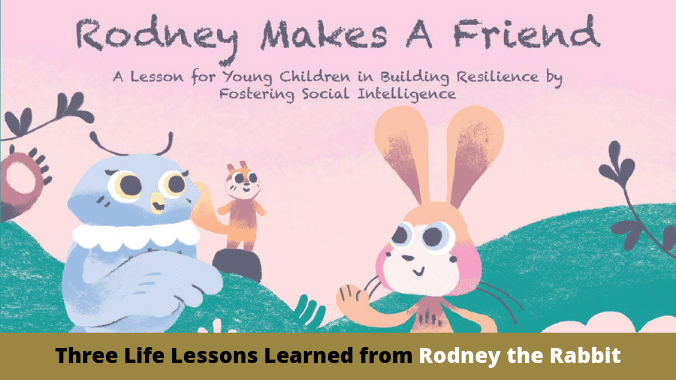
Guest blog authored by Gina Brelesky. This past year, I co-authored a children’s book about resiliency called “Rodney Makes a Friend.” The book features Rodney the Rabbit – a shy rabbit who learns how to overcome the challenge of making new friends. Since the book’s release, I have learned so much from parents and teachers! It has been great to hear from educators and care givers about how they are using Rodney to teach children social intelligence skills. As I listen to their experiences, I’m reminded that we can ALL benefit from the life lessons Rodney shares…here are my top three takeaways I invite you to keep in mind and share with both the adults and children in your life. Lesson 1: The Golden Rule of Friendship reminds us to treat others the way THEY want to be treated vs the traditional saying to treat others as WE want to be treated. Dr. Janet Little shared with me how she and her son, Payton, read the book over several nights. Payton loved the deliberate pauses built into the story and was able to make connections from the story to his own life. His mom shared, “My son and I read this book together. It’s a great fable about teaching kids and adults alike to never give up. My son learned about the “Golden Rule” to treat others like they want to be treated and has been able to apply that in his everyday life. This book has so many insights on keeping a growth mindset, an important lesson to learn when you are young and a great reminder for us all.” Lesson 2: We need to remember to take other’s perspectives into consideration. When we teach children the Golden Rule of Friendship, treating others the way they want to be treated, we are teaching them perspective taking. Being able to take the perspective of another is an essential life skill which supports the building of social/emotional intelligence and resiliency. Perspective taking will serve children now as they navigate all that makes up childhood and, in the future, as they enter the muddy waters of teenage-hood and ultimately adulthood. Lesson 3: It’s never too early or too late to improve our social and emotional intelligence. I must admit I was really excited to learn that fourth grade teachers could use “Rodney Makes a Friend” as part of their social and emotional health curriculum! Mrs. James sent me this after her class read the book together, “My fourth graders loved this book! It was a perfect read for them at this age. There are wonderful talking points which led to some great conversations!” For many children, fourth grade signifies the end of elementary school, which means navigating a new middle school and making new friends. The more teachers, parents and caregivers can talk with kids about the things that make them nervous and practice with them these social skills, the more confident and comfortable children will become when faced with the actual situation. As adults, we can continue to apply social intelligence skills as we begin new jobs, interact with new clients, attend business networking events, and more. Thank you all for supporting “Rodney Makes a Friend” getting into the little hands that will benefit from reading it! After all, shouldn’t our goal be to raise socially intelligent and resilient kids? I sure hope so! And, let’s not forget to apply these lessons to our own lives. To learn more, visit www.ginabrelesky.com. _____________________________________________________________________________ Gina Brelesky is an author, international trainer, talent coach and corporate educator with more than 25 years of extensive experience in training diverse groups of people in both hard and soft skills. Gina’s purpose is to support individuals, leaders, and teams to develop a growth mindset and achieve success. Through a strong partnership with her clients, Gina gains insight into their unique business culture, learns their perspective on success, and guides them through a process for achieving their goals. Gina is passionate about supporting people in building the skills and self-awareness they need to grow towards their full potential. She believes that as individuals progress along this journey of growth and awareness, they provide progressively greater levels of value to their teams and companies. Gina holds a Master’s degrees in Public Administration and Education. She has a Certificate of Advanced Study in Resilient Leadership and is DDI and DiSC certified. Gina is a trained coach through the Neuroleadership Institute in Brain-Based Coaching.
When to Begin Brand Building

I recently traveled to London for an early vacation. Amongst my adventures, I visited the beautiful town of Windsor, where Prince Harry and Duchess of Sussex Meghan Markle reside. As sheer luck would have it, the day I explored Windsor is the same day baby Archie Harrison Mountbatten-Windsor (what a mouthful!) was born. News crews lined every street, and the pubs filled with excited citizens yearning for the reveal of baby Archie on TV. Two days later, Meghan (postpartum in a white dress and heels – bless her) and Harry proudly showed off baby Archie on live TV. As Twitter flooded with reactions, I couldn’t help but think, “Wow, this baby’s brand literally began at birth.” As part of the British Royal Family, he will always have to be “on” – and can expect to be in the news on a regular basis. The same principle applies to business. As a new company is born, so is its brand. A first impression can last for many years to come, so it is important to develop effective, ongoing branding goals, strategies and tactics along the way. What does brand construction entail? After establishing your brand goals, there are multiple building blocks to reach them, including: Establishing a digital presence through social media and your website Creating community partnerships and customers Sharing positive news about your business with the media All of these efforts create initial deposits into your reputational piggy bank. But, what do you do if your brand is stagnant? Or, even worse, your reputation has been damaged? Even mature businesses can experience a re-birth – you can re-build and positively change your brand’s image in the court of public opinion. Whether you’re starting a new business or need a refresh, Fallston Group can help. Learn more about our strategic marketing & PR plans, media training and crisis leadership by exploring our website, or give me a call at 410-420-2001.
Four Simple Steps Tiger Took to Rebuild His Rep

When initially hearing about Tiger Woods’ major life and addiction struggles in 2009, winning a Masters green jacket a decade later was far from realistic, in everyone’s mind. In fact, Woods said at the time he would be taking an ‘indefinite break’ from golf. How did Woods achieve one of the most talked-about come-back stories? How did he regain public and corporate support while effectively nurturing a positive reputation? It wasn’t easy – but through guided steps in taking responsibility and implementing affirmative life changes, Woods was able to, again, win the Masters. Woods’ troubles began in November 2009, driving into a fire hydrant while under the influence. Sponsors such as Gatorade and AT&T immediately dropped the golfing legend due to his misbehavior off the green. Following his poor choices, he then tore his Achilles and didn’t play a full tournament until December 2016 at the Hero World Challenge. Woods’ first step towards his eventual 2019 green jacket was apologizing to fellow players and the public via US Weekly for his embarrassing decisions – step one: recognition and public apology. Through apologizing and announcing his remorse for his wrong-doings, it allowed the public to see he acknowledged his actions, and that he recognized was a dramatic need for change. Regardless of a company’s or individual’s position in the spotlight, mistakes do happen, bad choices are made and apologies can be accepted – as long as the person is truly remorseful and doesn’t repeat the bad behavior. Step two: taking action. As we all heard when we were young, actions speak louder than words. Woods apologized, and immediately completed a rehabilitation program which prompted the progress toward becoming the pro golfer we all love. This allowed fans to applaud Woods changing his moral outlook, correcting his mistakes and creating movement toward positive change. Step three: patience and persistence. Woods did not walk out of rehab and play his best 18 rounds of golf – it took time, a long time. Tiger Woods began playing in tournaments and losing – everyone thought he was finished. Effectively laying low, apologizing publicly, making efforts towards positive and sincere change and absorbing the heat of playing bad golf all enabled his eventual rebirth – adversity is advantage. This low point allowed Woods time for regrouping and confidence building as a private person and professional golfer. Step four: learn from mistakes. Woods is now coming off of his best week of golf – winning the 2019 Masters. He used his struggles as a building block in his career. He publicly discussed his come-back story and lessons learned. This created a sense of comfort and trust for fans and sponsors. Crisis isn’t easy – but if handled correctly, can be an opportunity for long-term, sustainable growth. There is no question, Tiger’s 2019 green jacket symbolized more than simply winning the Masters.
The Lost Art of Storytelling

Earlier this week someone told me, “Andrea, at times you’re quiet, but when you speak, it’s always a story.” Unbeknownst to them, that was a huge compliment, because at Fallston Group, telling our clients’ stories is part of what we do each and every day. When it comes to public relations and content writing, storytelling is truly an art – and in recent years, I’ve witnessed it fading. Ironically, my colleague sent me a sponsored LinkedIn post earlier this week, noting, “this isn’t how it works…” The opener was: GET MORE CLIENTS! Build credibility, authority & stand out from the competition… We guarantee that your story (custom-written by us) will appear on 300+ media websites across the United States. You’ll be able to legally use all their logos on your website and in your marketing in just a few days! Out of respect for the company, I won’t share the actual post, but my first gut reaction was, “Gross! How incredibly misleading!” Anyone with a computer can type up an article, and anyone willing to spend the money can capitalize on a variety of new “pay to play” media opportunities. Here’s the problem – it’s not storytelling/earned media – it’s paid ADVERTISING. To truly build reputational equity, you must go beyond paid media…and, work harder than simply distributing a press release. The real art in storytelling involves building meaningful relationships with news outlets, pitching a story, securing print, radio or TV interviews, and (every PR storyteller’s dream) in the best of scenarios securing a significant feature in a publication that is targeted and important to a client. This is news which can also be repurposed and shared across many digital platforms. Fallston Group is not a typical PR firm! I say with full confidence that we work to secure meaningful and scalable stories for clients. What is “meaningful” varies by company and what their unique goals happen to be. Some may only raise the awareness they need via a story in the local news – others need international coverage to make an impact and move the business needle. I am proud to pitch our clients’ stories, because they have news to share that truly makes a difference for their customers…and if something isn’t newsworthy, we have an honest conversation about it while continuing to farm within the “good news factory” we’ve established. If you’d like to discuss storytelling for your company, feel free to email me at andrea.lynn@fallstongroup.com, call 410.420.2001 or visit our website. Remember our mantra – “If you don’t tell your story, someone else will. And, if someone else tells your story, it certainly won’t be the story you want told.” Rings true for us every day!
